
In development
Q-Flow
Engineering software that automates the structural analysis of API 661 air-cooled heat exchanger (ACHE) header boxes, from geometry input to report.
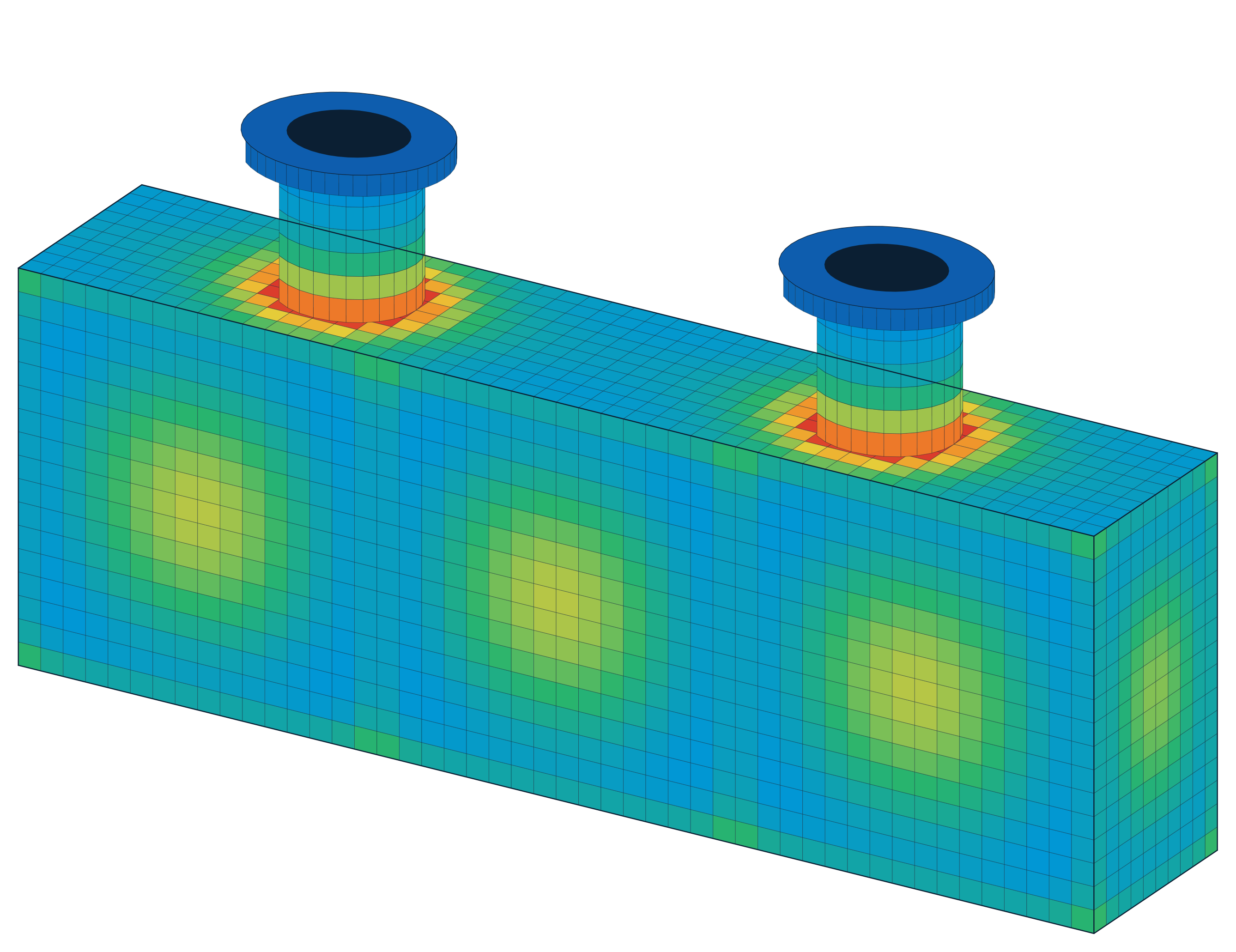
From manual analysis steps to a single flow
Q-Flow replaces the work of refining meshes and running load combinations one at a time with an automated procedure. Load combinations that are easy to skip because of time and cost are all calculated by the same procedure.
-
3D modeling
Takes the header box and nozzle geometry as input and automatically builds the 3D geometry for analysis.
-
Finite element analysis
Generates analysis input files in Python, runs them on the CalculiX solver, and calculates every load combination.
-
Report generation
Writes an analysis report in a standard format, including SCL (stress classification line) results.
Eight default load combinations
By default Q-Flow calculates eight combinations of maximum allowable working pressure (MAWP) with wind and seismic loads in each direction.
| Load | Direction |
|---|---|
| MAWP + wind | +X, −X, +Y, −Y |
| MAWP + seismic | +X, −X, +Y, −Y |
Product overview
We are building Q-Flow for EPC engineering teams that review drawings from many vendors.
| Target equipment | API 661 air-cooled heat exchangers (ACHE) |
|---|---|
| Analysis scope | Header box and nozzles |
| Solver | CalculiX |
| Automation | Python |
| Output | Analysis report including SCL results |
| Status | In development (not yet released) |
Q-Flow is in development, so details may change.
Tell us about the analysis or office work you want to automate
We take inquiries about contract development and Q-Flow by email.